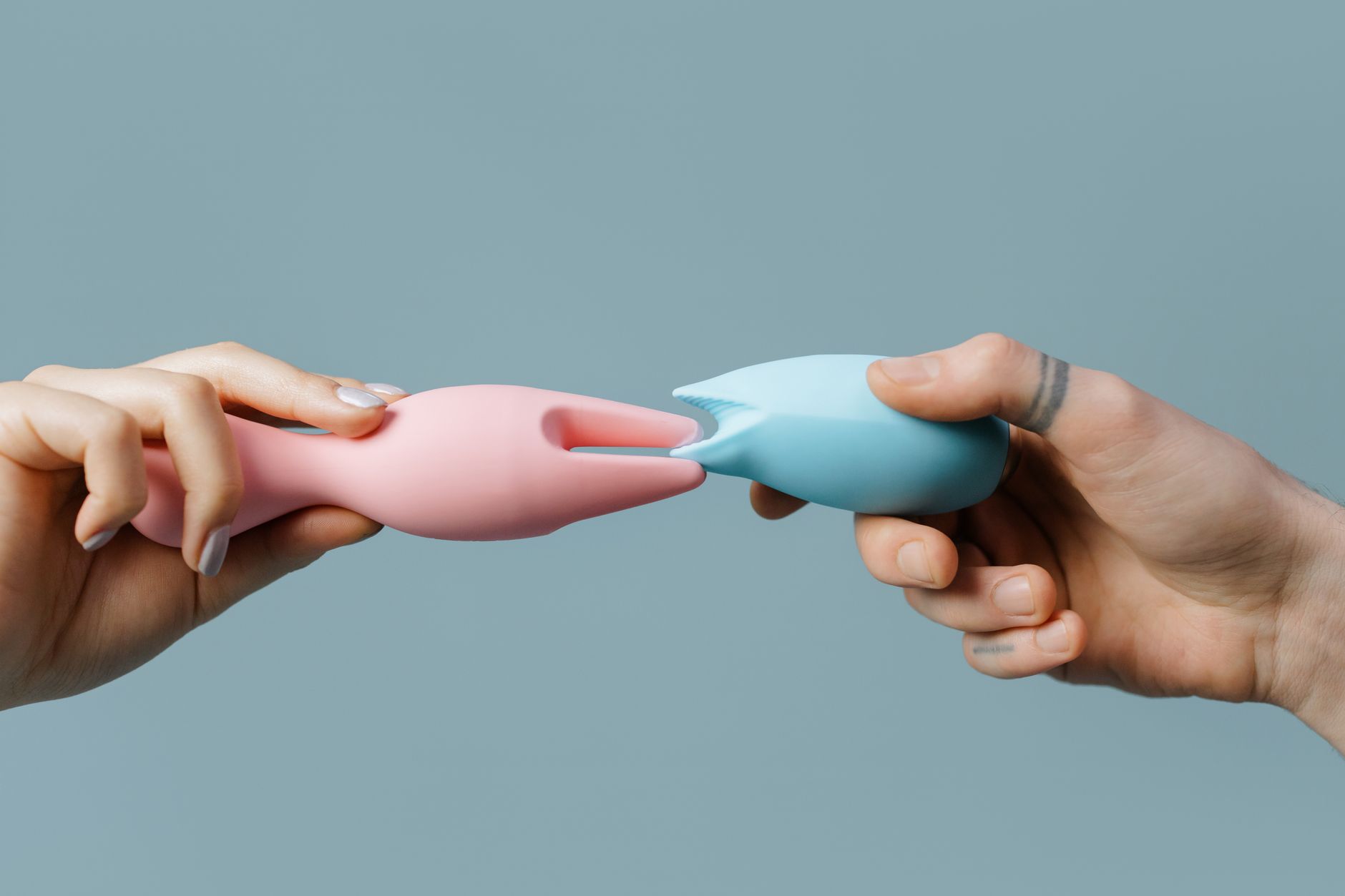
Let's talk about arousal timing
Here's what nobody tells you about foreplay: it's not broken if it feels too short. Your body isn't broken either. The friction mismatch between how fast your partner gets ready and how long your arousal actually takes to build is one of the most common relationship friction points I see in my practice, and it's almost never about desire.
Most people with vulvas need 15-25 minutes of stimulation to reach full arousal. Most people with penises need 3-5 minutes. That's not a complaint about either. That's just biology. The gap doesn't mean something's wrong. It means you need a tool that lets you build arousal on your timeline while your partner is building on theirs.
A lemon clitoral vibrator solves this in a way that nothing else does.
Why the arousal timeline actually matters
Arousal isn't just feeling horny. It's a cascade of physical changes: blood flow to your genitals, increased lubrication, clitoral swelling, relaxation of the pelvic floor, heightened sensitivity to touch. Skip any of these and the sex that follows feels rushed, uncomfortable, or just meh.
When foreplay ends before you're actually ready, you're entering sex in a half-aroused state. That means less lubrication, less clitoral engagement, less sensation overall. Your partner has no idea why you're quieter or less responsive. You think you should be ready by now. Everyone's confused.
The actual problem: you needed more time. Not more attention from your partner necessarily, but more sustained stimulation to your clitoris.
How a lemon vibrator changes the timing equation
A lemon sexual toy works because it does one thing extraordinarily well: it applies consistent, targeted stimulation to the clitoris without fatigue or loss of focus. Your partner's hand or mouth gets tired. They can't maintain exactly the same pressure for 20 minutes straight. A lemon clitoral vibrator can.
Here's the practical shift: instead of waiting for foreplay to reach some imaginary "ready" threshold, you introduce the lemon vibrator early. Your partner is kissing your neck, touching your body. You're holding the lemon vibrator to your clitoris at a low or medium setting. You're building arousal steadily while they're building theirs.
By the time your partner is ready for penetration, you're fully aroused. Not rushed. Not half-ready. Actually there.
Timing structures that actually work
The parallel approach. Your partner begins foreplay. You introduce the lemon vibrator within the first few minutes, set to pattern 1 or 2 (low intensity). They continue what they're doing—kissing, touching, penetrative teasing—while you're handling your own clitoral stimulation. You're synced emotionally even though the stimulation is happening independently. This often feels less performative than waiting for their manual touch to bring you all the way there.
The handoff. Start with hands-on foreplay from your partner. After 5-10 minutes, transition to the lemon vibrator while they shift focus to penetration or other intimacy. The vibrator doesn't replace them. It accelerates your arousal so you're ready when they need you to be.
The opener. For some couples, starting with the lemon vibrator for 5 minutes while your partner watches, touches, or penetrates you creates arousal fast enough that the rest of foreplay feels natural and mutual instead of like a race against biology.
Which structure works best depends on your dynamic, but the pattern is the same: the lemon vibrator is there to compress your personal arousal timeline so it overlaps with your partner's instead of running on a completely different schedule.
The psychological piece (it's important)
Here's what shifts when you introduce a lemon clitoral vibrator into foreplay specifically for timing: both partners stop feeling responsible for the other's entire arousal.
Your partner doesn't have to kiss your neck, touch your thighs, and somehow divine exactly when you're ready. You're not lying there willing your body to speed up while internally panicking that you're taking too long. That alone reduces performance anxiety for everyone.
It also reframes pleasure as something you're both building toward together instead of something one person is supposed to create for the other. You're collaborating instead of competing against biology.
Practical setup tips
If you're new to using a lemon vibrator during partnered sex, these reduce awkwardness:
Start clothed or mostly clothed. Introduce the vibrator while you're still kissing, still touching, still in early foreplay. It doesn't have to be this big production. It's just another tool like his hand or a position change.
Communicate the speed. "Medium setting feels good right now" or "faster when we shift to penetration" gives your partner a sense of your timeline without them having to guess. They'll often match their intensity to your vibrator speed, which naturally creates the synchronization you both need.
Use lube with silicone toys. The lemon vibrator works best against slightly lubricated skin. This also signals to your partner that you're aroused and ready to progress when the time is right.
Keep the vibrator there during penetration if it feels good. Some people use the lemon vibrator right up until entry, then set it aside. Others keep it on their clitoris during sex. Neither is right or wrong. Do what your nervous system wants.
The arousal arc you're aiming for
When a lemon vibrator bridges the timing gap properly, your arousal arc looks like this:
Minutes 1-5: Light foreplay, vibrator on pattern 1. Early arousal buildup.
Minutes 5-15: Foreplay intensifies, vibrator at pattern 2-3. You're building steadily. Your partner is building. The timing starts to sync.
Minutes 15-20: Your partner is ready. You're fully aroused. Penetration happens when both of you actually want it, not when one of you ran out of stamina.
This removes the awkward lag where one person is ready and the other is still warming up. The lemon vibrator is doing the warming up so your partner doesn't have to carry the entire weight of your arousal.
When this approach hits different
Some of my clients who've incorporated a lemon clitoral vibrator for timing specifically tell me they feel less self-conscious. Their bodies aren't the "problem" anymore. Their arousal isn't taking too long. They're just using a tool that lets them show up fully aroused instead of halfway there.
Partners often report that sex feels more mutual, less like someone's performing and someone's receiving. When both of you are actively engaged in your own pleasure while also connected to each other, the dynamic shifts.
When to tweak your approach
If the vibrator feels distracting instead of helpful, lower the intensity or change patterns. The lemon vibrator has multiple settings for a reason. You're looking for the sweet spot where stimulation builds arousal without overwhelming you.
If your partner feels left out when you're using the vibrator, that's worth a conversation before clothes come off. Maybe they need to feel more involved. Maybe they're worried they're not "doing enough." That's not a vibrator problem. That's a communication problem. Check out the resource on how to talk about lemon vibrators with your partner without shame for language that helps.
If penetration still feels uncomfortable even when you're fully aroused, this might not be a timing issue. It might be thin vaginal tissue or pelvic floor tension. Same toolkit, different problem.
FAQ: Arousal Timing and Lemon Vibrators
How much time do you actually need to get fully aroused?
It varies, but research suggests 15-25 minutes of clitoral stimulation for most people with vulvas. Some people need 10. Some need 30. The lemon vibrator doesn't change your need. It just makes reaching that baseline faster and less exhausting for both of you.
Does using a vibrator during foreplay make your partner feel replaced?
Not if you frame it right. This isn't you doing your own thing. It's you building arousal while they build theirs so you meet in the middle. Most partners feel relieved when they understand you're not waiting around for them to get you ready.
Can you use a lemon vibrator during penetration too?
Absolutely. Many people use the lemon vibrator during penetration to maintain clitoral stimulation. Your partner enters while the vibrator stays on your clitoris. Some positions make this easier than others. Experiment and see what works for your body.
What if you take longer to orgasm than to get aroused?
Different problem, similar solution. Arousal is the buildup. Orgasm is the release. You might be fully aroused quickly but need sustained stimulation to come. The lemon clitoral vibrator is still your friend here, just deployed differently.
Does starting with a vibrator mean you'll always need it?
No. You're not rewiring your nervous system. You're just using a tool that makes the timing work better in the moment. Some sessions you'll use it. Some sessions you won't. That's fine.
What if your partner insists on doing foreplay without toys?
That's a conversation, not a problem with your body or the vibrator. Check the piece on how to introduce a lemon vibrator when your partner is hesitant about toys for how to navigate that dynamic.
The bottom line
Foreplay timing mismatch isn't a relationship failure. It's not a sign your partner doesn't care about your pleasure. It's just biology running on different schedules. A lemon clitoral vibrator solves this by letting you build arousal on your timeline while staying connected to your partner on theirs.
You deserve to show up fully aroused and ready. Your partner deserves to know when you actually are. A tool like The Lem makes that synchronization possible. It's not laziness or cheating. It's just smart pleasure engineering.