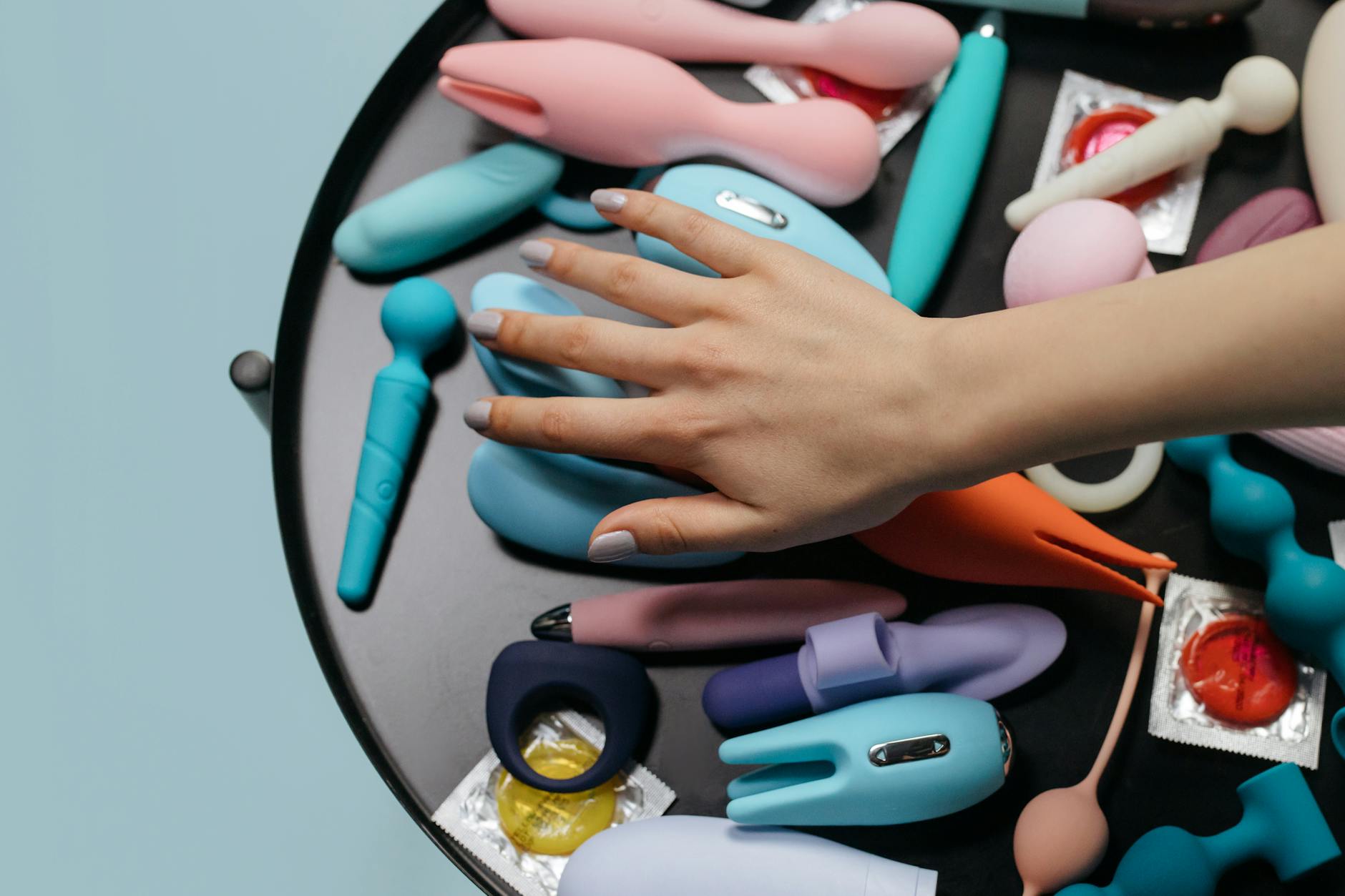
Here's what nobody tells you about pleasure at 40 plus
You're not behind. You're not weird. And you're definitely not alone.
In my two decades as a relationship therapist, I've worked with hundreds of women over 40 who are picking up their first vibrator. The conversation usually starts the same way: apology, embarrassment, a sense that they've missed some window that closed years ago. Then I tell them the truth: your 40s and beyond are actually the best time to start exploring. You know your body better. You care less about judgment. And you have permission in ways your younger self never did.
Using a lemon clitoral vibrator for the first time at this stage of life is an act of self-respect, not a consolation prize. Let's talk about how to do it right.
Why starting now is actually an advantage
There are real neurological and psychological reasons why pleasure exploration often deepens after 40. Your prefrontal cortex—the part of your brain that overthinks and worries—is fully mature. Your amygdala, which processes fear, quiets down. You've survived decades of other people's opinions. You know what you like in coffee, in conversation, in every other part of life. Why would your body be any different?
Many women in my practice report that orgasms feel more intense, more localized, and more satisfying after 40 than they ever did earlier. This isn't sentimental—it's neurological. You're working with a deeper understanding of your own architecture.
A lemon vibrator—with its precise suction-based stimulation—is particularly well-matched to bodies that have matured. You don't need the broad, diffused sensation that might work for someone 25. You can go deeper, more direct, more intentional. That's an advantage, not a liability.
The first thing to get right: permission
Before you even open the box, this part matters most.
There's a very specific voice that gets loud when you're starting this journey at 40 plus. It might sound like: "This is weird," or "I should have figured this out years ago," or "What will people think." Sometimes it sounds like: "I don't deserve this kind of pleasure." Listen for that voice. Acknowledge it. Then tell it you're doing this anyway.
I'm not being poetic. This is a real mental block that keeps many people from ever actually trying. You might order the toy, feel a wave of shame on delivery day, and shove it in a drawer for six months. I've watched this happen more times than I can count. The solution is deciding now that your pleasure is a legitimate priority. Not selfish. Not vain. Not late. A priority.
Write this down if it helps: "My body deserves attention and care at 40, 50, 60, and beyond. Using a vibrator is part of that care."
Setting up your first session with a lemon vibrator
Time matters more than anything else. You need uninterrupted time—at least 20 to 30 minutes. Not rushed. Not listening for footsteps. Ideally, when your energy is highest (for some people that's morning; for others, evening). This is a session, not a quickie.
Location: somewhere you feel safe and private. A bedroom works. A locked bathroom works if that's all you have. The shower works too, though water-based lube can wash away (we'll get to lube in a second).
Lube: non-negotiable. Even if you produce natural lubrication, add lube. It makes the sensation richer, it protects your tissue from any friction, and it signals to your body that this is intentional and worth your attention. Use a water-based lube with your lemon vibrator—silicone lubes can degrade silicone toys. Sliquid, Uberlube (yes, water-based despite the name), and standard water-based brands all work.
Temperature: warm hands and a warm body respond better. A hot shower before, or just spending five minutes under a blanket warming up, genuinely changes the experience.
How to actually use the lemon vibrator on your first try
Unbox it. Look at it. Read the basic manual so you know where the power button is. Don't overthink this part.
Charge it fully. Spend time just holding it, feeling the weight, getting comfortable with the shape. Some people find it helps to hold it over your clothes first, just to know what it feels like to have it near your body without any stakes.
Start solo. This matters. You don't need an audience or an audience in your head wondering what they think. The first time is about you learning what your body responds to.
When you're ready: lie down, get comfortable, make sure you have your lube accessible. The lemon vibrator uses air-suction technology, which means it creates a gentle seal over the clitoral area and pulses suction rather than vibration. This is different from a traditional vibrator. It's gentler on tissue and often creates a sensation that many describe as a "pulling" feeling rather than buzzing.
Start on the lowest setting. Press the power button and let it run for a few seconds before placing it against your body. You want to become familiar with the sensation without intensity.
Position: the toy works best when it's covering your clitoris fully. You might need to adjust slightly to find the angle that feels best. Angle matters more than you'd think. Experiment.
Pressure: you control the seal by how firmly you press. Light pressure means lighter sensation. Firmer pressure creates a stronger pull. You get to set this—nobody else is doing it for you. That's the whole point.
Speed: once you find a pattern and position that feels good, stay with it. The temptation is always to chase intensity by turning up the speed, but actually, rhythm and consistency matter more than power. Many people find that pattern 2 or 3 on the Lem, held steady for several minutes, creates better sensation than constantly turning it up.
What you might feel (and what it means)
Nothing at first. Honestly, this is common. Your body might take 5 to 10 minutes to "wake up" to what's happening, especially if it's your first time with a lemon vibrator. Stick with it. Don't interpret nothing as failure. It's just loading time.
Sensation that feels good but weird. You might feel arousal building but in a way that's unfamiliar. That's your body learning a new input. Stay curious instead of critical.
Intense sensation that's too much. Turn it down. Or take it off for 30 seconds and come back. You're allowed to adjust. You're the one in charge here. This is revolutionary information for women who've spent decades calibrating pleasure around someone else's pace.
A building sensation that feels like it might lead somewhere. Keep going. Stay with the same pattern. Don't change speed. Orgasm isn't the goal—pleasure is—but if one happens, it happens. If it doesn't, you've still had pleasure, which was the entire point.
What you're actually learning
This isn't just about physical sensation. You're teaching your nervous system that your pleasure is worth time and resources. You're learning your own architecture without performance pressure. You're building a relationship with your body that's based on curiosity instead of function.
Many women over 40 have spent decades in bodies that were framed as serving other people. A baby. A partner. A job. A household. Using a lemon vibrator is an act of remembering that your body exists for you too. That it can feel good in ways that have nothing to do with anyone else.
If you have a partner, this isn't about them. If you don't, this isn't about waiting for one. This is about you and your nervous system, learning together.
How often should you be using it
Start with once a week. That gives you time to notice what you're feeling without it becoming mechanical. You're not training for something. You're exploring.
Some people find they want to use a lemon vibrator more frequently. Some stick with weekly. Some use it only occasionally. There's no wrong answer. The goal is developing a relationship with your pleasure that feels sustainable and genuine to you.
Many women find that exploring solo actually improves their experience with partners, if they have them. You learn what you like. You build arousal capacity. You become more confident. None of that requires permission from anyone else.
The questions people don't ask but should
Should it hurt? No. Mild pressure sensation, yes. Discomfort or pain, no. If something hurts, stop. See a pelvic health specialist if pain persists.
Will it feel the same every time? No. Your body changes day to day based on cycle (if you menstruate), stress, sleep, food, a million things. Sometimes the sensation will be intense. Sometimes subtle. That's normal.
Can you use it with a partner? Yes, absolutely. That's a different conversation though, best saved for when you already feel confident solo.
Will it damage anything? No. Silicone toys are body-safe. Air-suction technology is gentler on tissue than vibration. You're not going to break yourself.
Should you feel embarrassed? No. But if you do, that's information. Shame is usually a sign that you've internalized someone else's judgment about your body. That's work worth doing, and it has nothing to do with the toy.
When to reach out for support
If you're experiencing pain, numbness, or complete loss of sensation in the area, talk to a pelvic health specialist. Sometimes numbness points to a neurological issue that's worth investigating. If you're dealing with thin tissue or previous trauma, a specialist can give you specific guidance.
If the shame doesn't lift after a few weeks, consider talking to a therapist who specializes in sexual health. Pleasure shame is real and often runs deep. You don't have to untangle it alone.
If you're unsure whether a lemon vibrator is right for you, reach out. The Lem Store can point you toward resources specific to your situation. There's no judgment here.
The bigger picture
You're starting something at 40 plus that many people never start at all. You're prioritizing your own sensation and comfort. You're learning what your body is actually capable of without apology. You're building a foundation for pleasure that can deepen across decades.
That's not late. That's exactly right.
People also ask
Is it normal to feel nothing the first time with a lemon vibrator? Yes. Your body might take several sessions to fully respond to the sensation. Some people feel immediate response; others need a few tries. Neither is better than the other.
Can I use a lemon vibrator if I'm taking antidepressants that affect sensation? Absolutely. Many people find that lemon vibrators work particularly well when medication is affecting their natural response, because the focused air-suction technology can work around reduced sensation.
How long should the first session last? There's no timer. If 10 minutes feels enough, that's enough. If you want 30 minutes, take it. Your pleasure doesn't have performance metrics.
Is it weird if I cry or feel emotional while exploring? Not weird at all. Pleasure, permission, and touch can release a lot of emotion. Cry if you need to. It's part of the process.
What if I'm partnered and haven't told them yet? That's your timeline. Some people share immediately; some explore privately first. Both are valid. If you decide to share, frame it as something that's for you, not something missing from your relationship.
Should I expect an orgasm the first time? No expectations. Pleasure comes in many forms. Arousal building, warmth spreading, mental clarity, tension releasing. All of that is a win.